


Researchers have said that the average person will spend one third of their life at work. When put into perspective, that is an enormous amount of time spent investing in an organisation and its mission. It is vitally important that workplaces are creating environments that not only provide a paycheck but provide the more intangible benefits that attract and retain top performers.
In an age of increased flexibility and a robust job market, employees’ priorities have evolved. Whereas in the past salary, health insurance, and a 401k made up the majority of one’s compensation package, there has been a shift towards a more diverse variety of rewards that come together to paint a more holistic picture of wellness. These benefits include perks that not only promote financial health, but work/life balance, psychological safety, flexibility, and emotional wellbeing.
The less tangible benefits of work that make up the newly coined term “emotional paycheck” include flexibility in work location and working hours, gym memberships, meditation app subscriptions, positive work culture, and more. In short, they are the non-financial gains that employees obtain that motivate and engage them on a more emotional level and lead to greater wellbeing and job satisfaction.
Wiley Workplace Intelligence set out to gain insight into what individuals in organisations today are prioritising when it comes to benefits at work, whether that includes compensation packages, positive organisational cultures, work location and time flexibility, and more.
We surveyed 2,013 individuals to understand what kinds of benefits (tangible and intangible) are being offered in their organisations and to what extent they impact wellbeing and engagement – the qualities that make up an “emotional paycheck.”
The Elements of Wellbeing
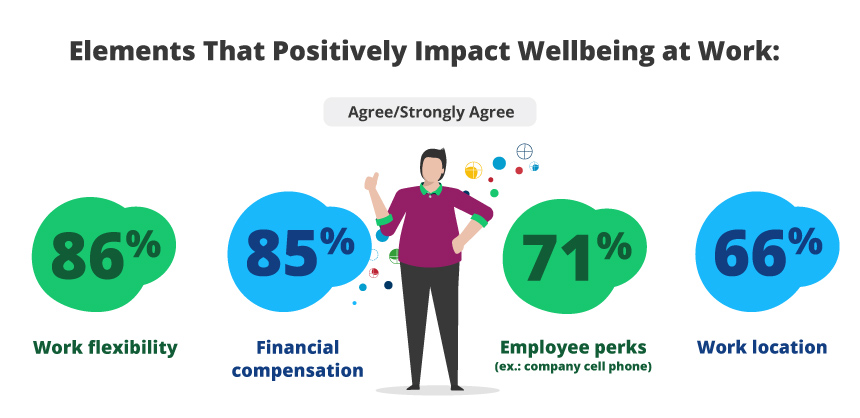
Overall, wellbeing at work is comprised of a variety of elements with varying degrees of impact. Our respondents reported work flexibility and financial compensation as the benefits that have the highest impact on wellbeing.
Priorities Reflect Age and Experience
Interestingly, when broken down by generation, 18–24-year-olds were the only group to prioritise work time flexibility over culture, and by 12 percentage points. All other age groups prioritised culture over all other options, and by quite large margins. This is an intriguing insight that speaks to the difference in priorities as individuals age.
This indicates that while most generations prioritise organisational culture, the younger segment of the Gen Z population prioritises time flexibility over work culture. This preference could reflect their desire for autonomy and work-life balance, valuing the ability to customise their work hours to fit their personal needs and lifestyles.
On the other hand, it speaks volumes that the vast majority of those surveyed prioritise organisational culture, indicating that as one grows in their career, they become more aware of the impact an organisation’s culture can have on their engagement and wellbeing. It is also a reflection of life experiences outside of work, as growing families and evolving responsibilities necessitate a more positive work culture that can help cultivate better work/life balance.
| 18-24 | 25-34 | ||
|---|---|---|---|
| 34% | Work time flexibility | 26% | Culture |
| 22% | Culture | 24% | Work location flexibility |
| 19% | PTO | 21% | Work time flexibility |
| 35-44 | 45-54 | ||
|---|---|---|---|
| 32% | Culture | 37% | Culture |
| 22% | Work location flexibility | 24% | Work location flexibility |
| 21% | Work time flexibility | 18% | Work time flexibility |
| 55-64 | 65+ | ||
|---|---|---|---|
| 40% | Culture | 48% | Culture |
| 22% | Work location flexibility | 29% | Work location flexibility |
| 19% | Work time flexibility | 14% | Work time flexibility |
Positive Culture Tops List of Non-Financial Compensation
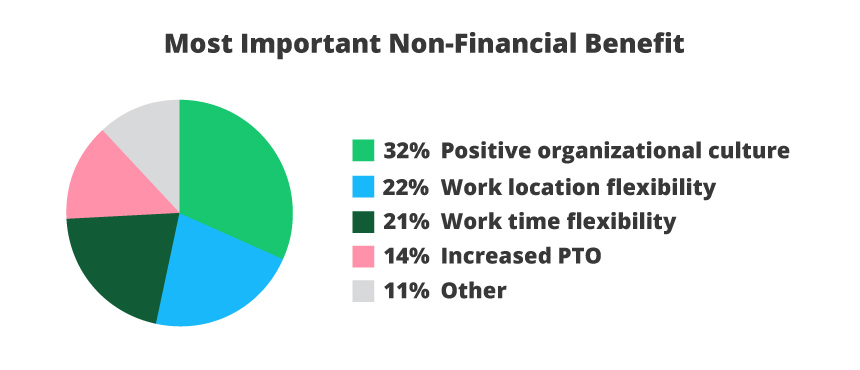
Overall, positive organisational culture topped the list of non-financial compensation benefits by ten percentage points. In a list that included such valuable perks as allowance, gym membership, transportation reimbursement and more this speaks to the impact that positive organisational cultures can have on the “emotional paycheck” aspect of a job.
There are numerous benefits to positive organisational cultures as they create an environment where employees feel valued, supported, and empowered, leading to higher levels of wellbeing both in and out of the workplace.
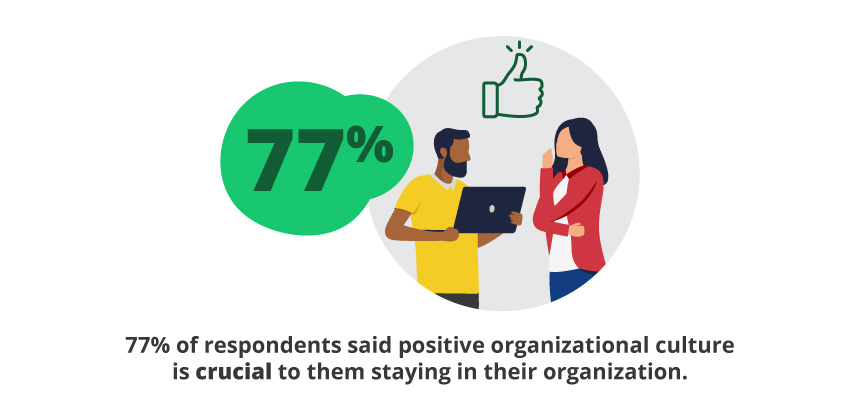
Of those who ranked positive organisational culture as number one, the majority of them said that it was crucial to their staying with the company. That statistic is vital information for companies when considering how to invest in their people and what they are looking for in an organisation.
Money vs. Culture: Culture Wins
While there is no doubt that a competitive salary is an important part of not only work, but life, 73% of our respondents shared that a positive organisational culture is important to them, vs. 27% who said that working for a company who pays well is the most important. This surprising statistic highlights the massive impact healthy cultures can have on overall employee wellbeing.
This research is good news for organisations, who have the power to improve their cultures. One way they can get started is by engaging assessment and facilitated learning experiences (like Everything DiSC or The Five Behaviours that boost communication, collaboration, and understanding – important qualities that go into creating great organisational cultures that contribute to a meaningful emotional paycheck.
The Fruitful Toolbox are Authorised Partners of Everything DiSC and The Five Behaviours. To learn more about DiSC, find out how to contact us here.
To view this original blog by Wiley please click here.
