
Last updated: August 2026
Why do intelligent, experienced people sometimes struggle to work effectively as a team? The answer is rarely a lack of technical capability. More often, performance is affected by what happens between team members: limited trust, avoided conversations, weak commitment, inconsistent accountability and competing priorities.
Patrick Lencioni’s work gives leaders, HR professionals and L&D teams a practical way to understand – and address – these challenges. His best-known book, The Five Dysfunctions of a Team, introduced a simple but powerful model that has influenced team and leadership development around the world. It also provides the foundation for The Five Behaviours®, an assessment-led development experience designed to turn Lencioni’s ideas into practical action.
Who is Patrick Lencioni?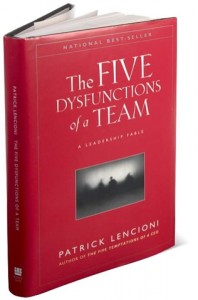

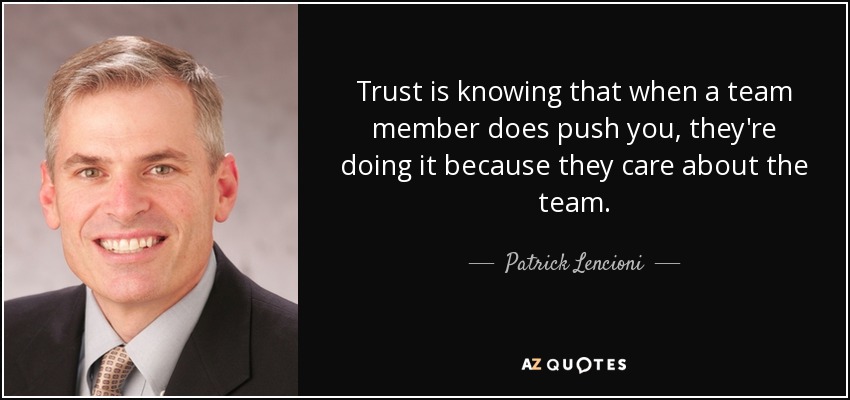
Patrick Lencioni is an author, speaker and consultant specialising in leadership, teamwork and organisational health. He is one of the founders of The Table Group, established in 1997, and is recognised as a pioneer of the organisational health movement. Before launching The Table Group, he worked at Bain & Company, Oracle and Sybase. Lencioni has written 13 books, which have collectively sold more than 10 million copies and been translated into over 30 languages. His work is known for making complex organisational challenges feel clear, memorable and actionable.
Rather than presenting ideas solely through traditional business theory, many of his books use leadership fables. These stories allow readers to recognise familiar behaviours, conversations and tensions before exploring the practical model behind them. For busy HR and L&D professionals, that simplicity is part of the appeal: the ideas are easy to explain, but powerful enough to create challenging and meaningful conversations.
What is The Five Dysfunctions of a Team?
First published in 2002, The Five Dysfunctions of a Team is Lencioni’s best-known book and has sold more than four million copies. The book follows the fictional story of Kathryn Petersen, a newly appointed CEO attempting to bring together a talented but divided leadership team. As the story unfolds, Lencioni identifies five interconnected dysfunctions that can prevent a team from performing effectively:
1. Absence of trust
When team members are unwilling to be open about mistakes, weaknesses or the need for help, they protect themselves instead of collaborating fully. The positive behaviour is vulnerability-based trust: the confidence to be honest, ask for support and admit when you do not have all the answers.
2. Fear of conflict
Without trust, people are more likely to avoid difficult conversations. Meetings may appear polite, but important concerns remain unspoken. The positive behaviour is productive conflict: open, constructive debate focused on ideas rather than personal attacks.
3. Lack of commitment
When people have not been able to voice their o
pinions or challenge a proposal, they may appear to agree without genuinely supporting the final decision. The positive behaviour is commitment: creating enough clarity and buy-in for everyone to move forward – even when the decision was not their preferred option.
4. Avoidance of accountability
If commitments are unclear or only partially supported, colleagues may hesitate to challenge missed deadlines, poor performance or unhelpful behaviour. The positive behaviour is peer accountability: team members taking shared responsibility for standards instead of leaving every difficult conversation to the leader.
5. Inattention to results
When accountability is weak, personal priorities, departmental goals, status or individual recognition can take precedence over what the team needs to achieve together. The positive behaviour is a consistent focus on collective results.

Why do the five dysfunctions build on one another?
One of the strengths of Lencioni’s model is that it presents team performance as an interconnected system. Trust makes honest disagreement possible. Constructive debate creates greater clarity and commitment. Commitment makes accountability fairer and easier. Accountability helps everyone remain focused on collective results.
This means organisations should be cautious about treating each dysfunction as an isolated skill. For example, asking people to challenge one another more frequently is unlikely to succeed if they do not yet feel safe admitting mistakes or expressing a different view. Similarly, introducing new performance measures will not automatically create accountability if the team has never clearly committed to its shared priorities. The model encourages teams to start with the foundations rather than focusing only on the most visible symptom.
Why is Lencioni’s model still relevant?
The way teams work has changed significa
ntly since the book was published. Teams may now be hybrid, geographically dispersed, cross-functional or frequently changing. However, the underlying questions remain highly relevant:
- Do people feel able to speak honestly?
- Can the team disagree without damaging relationships?
- Are decisions and priorities clear?
- Do colleagues challenge one another constructively?
- Are collective results more important than individual agendas?
These questions matter during organisational change, rapid growth, leadership transitions and periods of uncertainty. They are also relevant to established teams that appear successful but know they could make decisions, communicate and deliver more effectively. The model gives teams a shared, non-judgemental language for discussing these issues.
From understanding the model to changing behaviour
Reading The Five Dysfunctions of a Team can create insight, but in
sight alone does not guarantee behavioural change. Teams often need a structured way to:
- understand their current strengths and challenges
- explore how individual styles affect team dynamics
- have conversations they may normally avoid
- agree what needs to change
- practise new behaviours
- review progress over time
The Five Behaviours® was developed with Patrick Lencioni to help organisations put the model into practice. It combines the framework of Trust, Conflict, Commitment, Accountability and Results with personalised insights powered by Everything DiSC®.
This helps team members explore not only what an effective team needs, but also how their individual preferences can support or inhibit those behaviours. For example, one person may be quick to challenge an idea but need to consider how their directness affects trust. Another may create harmony and support but need greater confidence to raise concerns. The purpose is not to label either approach as wrong; it is to help people recognise their impact and adapt when the team needs something different.
How can HR and L&D use the model?
Lencioni’s framework can support a wide range of people and organisational priorities, including:
- leadership-team development
- forming or integrating new teams
- improving decision-making
- developing productive conflict
- strengthening accountability
- supporting teams through change
- reducing siloed working
- building a wider culture of teamwork
Before introducing the model, clarify the business outcome you want to support.
Instead of beginning with “We need a team-building session”, ask:
- What does the team need to achieve?
- Which behaviours are currently getting in the way?
- What conversations are not happening?
- What would people see and hear if the team improved?
- How will the new behaviours be reinforced?
These questions move the conversation from an interesting workshop to a purposeful team-development initiative.
Bringing Patrick Lencioni’s work to life in your organisation
The most successful team-development programmes connect Lencioni’s model to the real work of the team. At The Fruitful Group, we help organisations use The Five Behaviours to turn insight into practical, sustainable change. Depending on your requirements, we can:
- facilitate a tailored programme for your team
- provide assessments, profiles and facilitation resources
- support experienced internal practitioners
- train your internal facilitators and team coaches
- help you embed the framework across a wider organisation
Whether you are responding to a specific team challenge or building a longer-term approach to team development, we can help you identify the right starting point.
Explore The Five Behaviours®, discover how to run a successful programme or talk to us about your team’s current challenges.

