


As you can see, people expect leadership to be collaborative and people focused. Nowhere does it say “authoritative,” or “charismatic” – words we might have expected to see 10 years ago. But if our expectations of leadership have changed, have we also changed the way we view emerging leaders?
Leadership at Every Level
When asked, nearly 82% of respondents said they considered themselves a leader, with 62% of individual contributors viewing themselves as a leader. The data suggests that how people view themselves at work has expanded beyond formal title. As such, we asked participants to rank the ideal qualities they want in a leader.
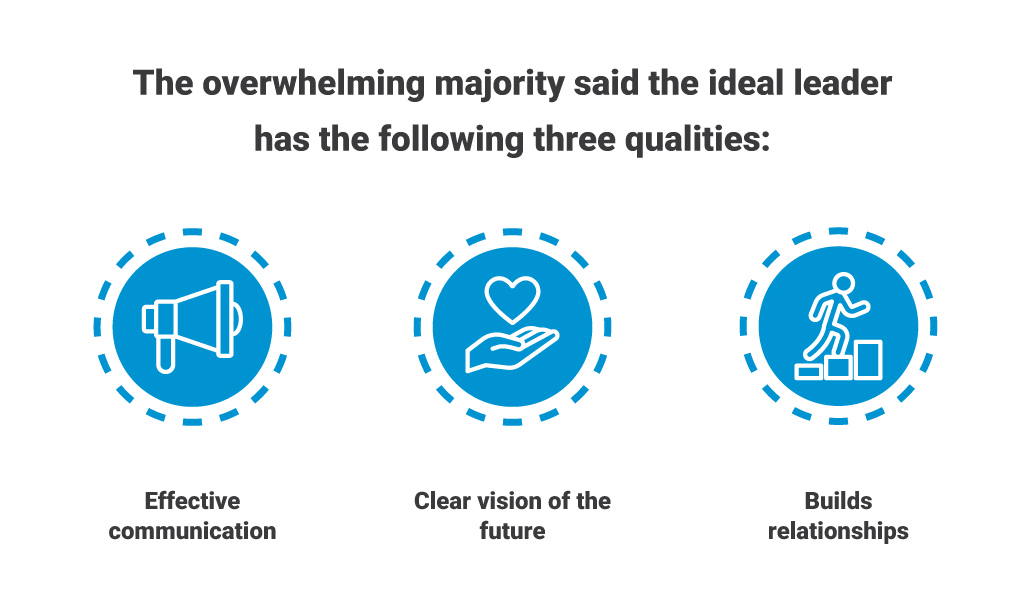
What’s interesting about these three qualities is that they can be found at every level; they are not limited to roles or positions. Effective communication is critical in all roles, everyone is capable of building relationships, and all employees should understand the organisation’s vision.
Why does this matter? By thinking about leadership as behaviours that can be learned, we can focus on ways to create opportunities for all employees to gain experience and build the skills to be a leader. If we have a better understanding of the desired behaviours, we can do a better job of preparing leaders to learn and practice the skills. We can also shift our perspective from viewing leadership as a formal designation to a more holistic view where anyone can be a leader. This is the concept of “leadership at every level.” You may have heard of the concept, but what does it really mean? Here’s how our respondents perceived “leadership at every level.”
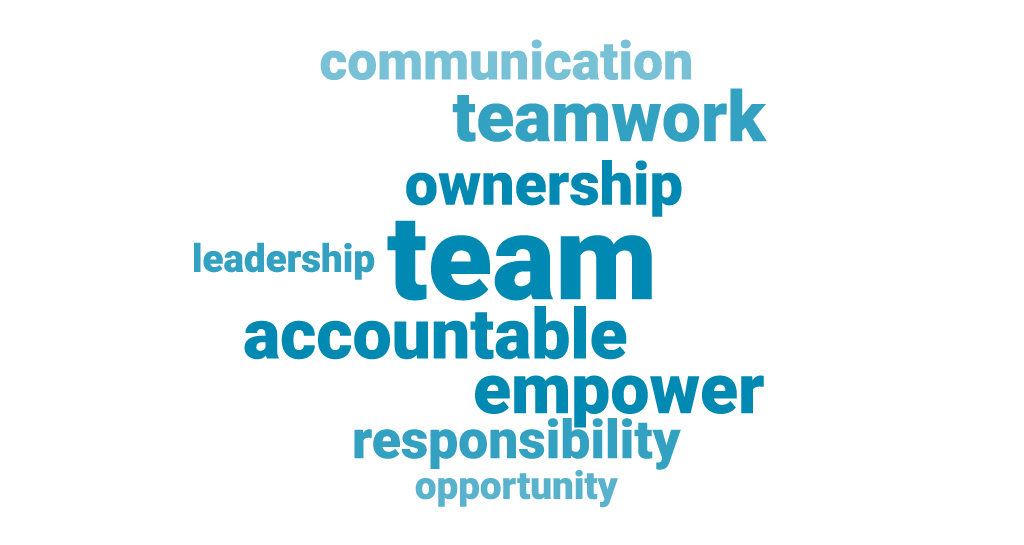
We define “leadership at every level” as empowering employees to perform at their best in their current role by creating a sense of ownership and accountability in their work and the work of the organisation. It doesn’t mean that employees must hold a formal leadership role but rather take ownership of their work and seek opportunities to grow. In essence, leadership at every level is creating a culture of empowered employees.
For those who view themselves as leaders, how are they showing leadership in their current role? More than a third cited coaching others, sharing innovative ideas, being accountable, and seeking feedback on their performance as ways they currently demonstrate leadership. When we think of the outcome of these behaviours, the impact becomes clear: Leadership at every level creates an organisation where employees feel included, valued, and heard.
Creating a culture of leadership at every level
It’s a commonly accepted principle that achieving a work environment where employees feel included, valued, and heard—while good for people—is also good for business. Our research supported this principle with 98% of our respondents saying that when they feel valued by their employer, they feel ownership in their work, are more productive and motivated, and feel like they are contributing to the success of the organisation. So, if leadership at every level is a worthy pursuit, our next question must be this: How do organisations create a culture of leadership at every level?
Not surprisingly, creating a culture of leadership starts with the evaluating the values, systems, and people processes that fuel your culture. At the organisational level, building systems that promote transparency, consistency, role clarity, and trust is the foundation for positive organisational culture. At the employee level, this can be done by creating a psychologically safe environment that encourages inclusion, collaboration, collegiality, connectedness, and innovative thinking among all employees. This improves culture by strengthening relationships, increasing effective communication, and building trust within the workplace.
Creating the conditions where employees feel empowered to lead, while a great first step, is only half the equation. Tangible results happen when organisations also invest in each employee’s development and success as a leader.
The investment should start early through embedded opportunities to build leadership skills for all employees. We shared earlier that 62% of individual contributors view themselves as a leader, yet our research found that only 28% of individual contributors said they have received leadership training. In comparison, almost 60% of respondents in leadership roles reported receiving leadership training. What’s clear in these numbers is that there are gaps in our leadership development programmes. Given that leadership isn’t an innate characteristic, but a skill honed with time and practice, organisations have a great opportunity to get people working on their leadership skills for today and the future.
Consider whether your organisation currently offers leadership skills training for all employees. If not, this is one way to build a culture of leadership at every level by offering training across roles, which will positively affect the success of the organisation.
The bottom line is that investing in your employees benefits the individual and organisation. According to our survey results, employees, regardless of role, felt strongly that leadership training at every level would empower employees, strengthen relationships, and build deeper connections. Notice any similarities? It’s the power of leadership at every level. When people feel empowered, they are more likely to be connected to the work, stay at the company, and work toward the success of the organisation.
Interested in finding out more about investing in employees? Stay tuned, next month we will continue to explore Investing in Employee Experience, Practical Ways to Retain and Engage employees.
The Fruitful Toolbox are Authorised Partners of Everything DiSC and The Five Behaviours. To learn more about DiSC, find out how to contact us here.
To view this original blog by Wiley please click here.
